Wednesday, 15 August 2012

Fwd: Education on the Path to Sustainability – proposed indicator set to evaluate education for sustainable development


Colleagues, this is a link to recent work carried out in Austria, Germany and Switzerland on indicators to evaluate ESD


This is the group's summary statement:

A majority of actors in politics and science stated that the idea of sustainability should be established in national education systems around the world.  Practitioners, politicians and scientists all unanimously agree that simply taking action is not enough – it is also necessary to evaluate how successful efforts at reaching this goal have been. Subsequently a number of initiatives with the aim of developing relevant indicators started in different countries, including Switzerland, Germany and Austria.

The international research project "Development of Indicators to Evaluate Offerings and Performance in the Area of Education for Sustainable Development (ESD)" (2008-2011) is one of these initiatives.  It was supported in Germany by the Federal Ministry of Education and Research (BMBF), in Austria by the Federal Ministry for Education, Arts and Culture (BMUKK) and in Switzerland by the State Secretariat for Education and Research (SER).

This book presents the theoretical foundations, methods and chosen results of this interdisciplinary project. The goal of the project was to present indicators that would allow to answer the question of whether and to what extent the idea of sustainability has been integrated in the education system for all levels of formal education, and not only at a national level in the participating countries, but also in international comparison. The work resulted in a set of ten ESD indicators, which due to a process of negotiation among actors from science, politics and practice has a broad foundation. The book provides a transnational description of the indicators and a description format to be used in their concretization for a given country.  It thus provides a basis for the further implementation of indicators for education for sustainable development. The book is an extract of the project's results provided for the international expert conference in the aftermath of the project where the indicators were put up for discussion in a broader context. In the full version, available only in German, the indicators are concretized for the three countries participating in the project.


The book will be launched, and ideas explored, at a conference in September.  
............................................................
William Scott
Professor Emeritus
University of Bath, UK   BA2 7AY    
Phone:  +44 [0]7790938192


David Andrew, 
Head of Academic Practice
Senior Tutor


The Learning Institute 
Queen Mary, University of London

Mile End, London E1 4NS


02078822803

02081446753

 Book an appointment with me at http://doodle.com/DavidAndrew

My profiles: Twitter Google Plus
Contact me: Skype david.andrew52
Latest tweet: new blog post Fwd: Invitation to The Fifth Annual Student Writing in Transition Symposium http://t.co/TOjqxVa3

Monday, 30 July 2012

2011: Green Academy: Curricula for tomorrow

2011: Green Academy: Curricula for tomorrow: "2011: Green Academy: Curricula for tomorrow
Start date: 2011-02-15
Status: in progress
Funding Initiative: Higher Education Academy
Our Education for Sustainable Development (ESD) project has launched a pilot change programme, in association with the Environmental Association for Universities and Colleges (EAUC) and the National Union of Students (NUS), to help institutions achieve sustainability in the curriculum goals."

'via Blog this'

Wednesday, 18 July 2012

Fwd: How to Create a Sustainable Event


Hi all,


Thought you might be interested in this guide to creating a Sustainable Event.


Kind regards,


Rebecca


Rebecca Maiden

Head of Energy and Environment

Queen Mary, University of London


Ph: +44 207 882 8898

Mob: +44 7785 351 874

Email: r.maiden@qmul.ac.uk

Web: www.sustainability.qmul.ac.uk


Twitter: QMsustain

Facebook: QM Sustainability


Queen Mary is committed to reducing its carbon footprint.  Please only print this email if absolutely necessary.


Thursday, 28 June 2012

Fwd: Future Fit Framework


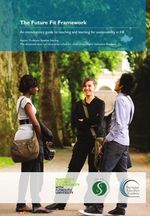
Dear Colleagues    Please find description of and link to my newly released introductory guide to ESD in Higher Education - written to help newly interested colleagues become involved, or take existing work further. Please forward as appropriate.    with thanks    Stephen    Professor Stephen Sterling  Plymouth University      The Future Fit Framework: an introductory guide to teaching and learning for sustainability in HE  http://www.heacademy.ac.uk/assets/documents/esd/The_Future_Fit_Framework.pdf  'This is one of the most comprehensive and accessible guides for academic and professional practitioners who are seeking ways of embedding sustainability into the curriculum and teaching and learning in higher education. It's both fit for purpose and fit for the future.'    - Stephen Martin, chair of the HEA ESD Advisory Group and President of Change Agents UK  This comprehensive 'what, why and how' guide was commissioned and is published by the Higher Education Academy (HEA). Written and compiled by Professor Stephen Sterling, Centre for Sustainable Futures, Plymouth University, the Framework is based on the experience of HEA's Education for Sustainable Development Project in supporting the embedding of sustainability in the HE curriculum.  The Framework is designed to help the newly interested academic better understand and engage with sustainability education, and encourage more experienced colleagues to take this work further. Organised into 14 sections plus Appendices, the guide is designed so that users can easily find the information and ideas that are most useful to them without needing to read the whole document. The concepts, ideas and models presented are intended as indicative rather than in any way prescriptive or limiting. They are designed to help, to be used and tried out, amended, critically discussed and adapted as part of the individual and institutional learning process towards quality ESD provision. Contents include:  1 Introduction; 2 Why bother?; 3 Graduates fit for the future?; 4 Where to start?; 5 Barriers – and pathways; 6 Objections - and answers; 7 Key concepts and values; 8 ESD pedagogies; 9 ESD in the disciplines; 10 Simple change tools; 11 Teaching/CPD activities; 12 Research and ESD; 13 Resources; References; Appendices.  'I've been using your Fit for the Future Framework very successfully with our Deans here.'    - Jane Davidson,Director INSPIRE: Institute for Sustainable Practice, Innovation and Resource Effectiveness, Trinity Saint David University, Wales        <http://www.heacademy.ac.uk/assets/documents/esd/The_Future_Fit_Framework.pdf>[http://www.eauc.org.uk/image_uploads/fff_resized.jpg]<http://www.heacademy.ac.uk/assets/documents/esd/The_Future_Fit_Framework.pdf>    Stephen Sterling  Professor of Sustainability Education  Head of Education for Sustainable Development (ESD)  Centre for Sustainable Futures  Plymouth University  Kirkby Lodge  Drake Circus  Plymouth PL4 8AA  United Kingdom    tel 01752 588898    http://www.plymouth.ac.uk/staff/srsterling    email: stephen.sterling@plymouth.ac.uk<mailto:stephen.sterling@plymouth.ac.uk>  Website: http://www.plymouth.ac.uk/pages/view.asp?page=37407    Sterling, S (2012) 'The Future Fit Framework: an introductory guide to teaching and learning for sustainability in HE'  http://www.heacademy.ac.uk/assets/documents/esd/The_Future_Fit_Framework.pdf      Sustainability Education: Perspectives and Practice across Higher Education<http://www.earthscan.co.uk/?tabid=102287>  Edited By Paula Jones, David Selby and Stephen Sterling    http://www.routledge.com/books/details/9781844078783/  


David Andrew, 
Head of Academic Practice
Senior Tutor


The Learning Institute 
Queen Mary, University of London

Mile End, London E1 4NS


02078822803

02081446753

 Book an appointment with me at http://doodle.com/DavidAndrew

My profiles: Twitter Google Plus
Contact me: Skype david.andrew52
Latest tweet: new blog post Fwd: Reminder: CfP - 2nd Workshop on Awareness and Reflection in Technology-Enhanced Learning http://t.co/fGitmvFj


Monday, 18 June 2012

Fwd: To be put on the HEA news

Dear Simon,

Could you add the following to the bulletin?

Thanks
Rodrigo

For centuries, universities have been at the forefront in creating and breaking paradigms, and educating the future decision-makers, entrepreneurs, and leaders. However, universities have remained traditional and have had a tendency to self-replicate, where far too much of modern education has continued to rely upon Newtonian and Cartesian mental models, which relegate learning and action to reductionist thinking and mechanistic interpretation.

In the last years there have been a number of universities engaging with Sustainable Development (SD); yet Education for Sustainable Development (ESD) has not fully permeated all disciplines, scholars, and university leaders, or throughout the curricula.

At the Stockholm Conference in 1972 education was formally recognised on an international level to play an important role in fostering environmental protection and conservation. Since then many academic declarations, charters and partnerships were developed that were designed to foster environmental education (EE), SD, and ESD. Since 1987 there has been a large increase in such initiatives. The declarations, charters and partnerships were designed to provide guidelines or frameworks for HEIs to better embed sustainability into their system. The increasing importance of such declarations, charters and partnerships, for fostering transformative SD is evidenced by the more than 1,000 university leaders who ratified their commitment to work to advance SD education and research by signing the Talloires Declaration, the Kyoto Declaration, and the Copernicus University Charter by the end of 2003.

In spite of a number of initiatives and an increasing number of universities engaging with SD, universities have remained quite traditional. Many of them still lag behind in regards to contributing to making societies more sustainable. Such mental models, coupled with resistance to change, and in some cases the self-replicating system of universities have limited the diffusion of the SD 'meme' in many universities, their system, as well as among all disciplines, scholars, and university leaders.

The initiatives (such as declarations, charters, partnerships and conferences) developed to foster SD can provide a framework or guidelines on how to better embed sustainability into the university system. The different initiatives discussed emphasise that universities have a moral obligation to work towards sustainable societies, focusing on environmental degradation, threats to society, and sustainable production and consumption for this and future generations.

Although these initiatives are intended to serve as supporting, guiding, and challenging documents throughout the university system, this does not ensure that the signatory institutions implement SD within their systems. There might also be institutions that have not yet signed a declaration or belong to a charter, but which are, nonetheless, actively engaged with SD on their campuses.

Nowadays, the HEIs with foresight and leadership are beginning to adopt and weave SD into their curricula, research, and outreach and campus operations.

Researchers from Belgium, Mexico, Slovenia, the UK, and the USA are working on a project looking at how different HEIs worldwide have implemented SD, and if they have signed a declaration, or belong to a charter. As part of this project we have developed an on-line survey: https://www.survey.leeds.ac.uk/sd_in_universities/ .

We would really appreciate it if you were able to distribute the email below to your network. If you have any questions please do not hesitate to contact Dr. Rodrigo Lozano, University of Leeds (r.lozano@leeds.ac.uk).

Tuesday, 12 June 2012

Fwd: New and recent ESD publications from the HEA, NUS, Prof Stephen Sterling, and Dr Alex Ryan


Dear colleagues,    As many of you will be aware, the HEA & NUS have just published the second report on Student Attitudes and Skills for Sustainable Development.  The findings reinforce, and in many cases strengthen, the landmark key outcomes of the first study published in 2011.  Headlines include:  Over two thirds of 2011 first and second-year respondents, as in 2010 (70%), believe that sustainability should be covered by their university  There is a continued preference among students for a reframing of curriculum content rather than additional content or courses  Two-thirds of respondents would sacrifice £1000 from their salary to work in a responsible company    The report can be downloaded from: www.heacademy.ac.uk/assets/documents/esd/Student_attitudes_towards_and_skills_for_sustainable_development.pdf      Colleagues should also be aware of the following valuable resources published by the Higher Education Academy during the past month that are also available for download:    The Future Fit Framework: an introductory guide to teaching and learning for sustainability in HE, by Professor Stephen Sterling:  http://www.heacademy.ac.uk/assets/documents/esd/The_Future_Fit_Framework.pdf    Education for Sustainable Development and Holistic Curriculum Change, by Dr Alex Ryan:  http://www.heacademy.ac.uk/assets/documents/esd/ESDandHolisticCurriculumChange_review_and_guide.pdf      Please do circulate these excellent resources widely to your colleagues and through your networks.    Best wishes,  Simon    Simon Kemp  Academic Lead, Education for Sustainable Development  Higher Education Academy      This email is confidential and may be privileged. If you are not the intended recipient please accept our apologies. Please do not disclose, copy, or distribute information in this email nor take any action in reliance on its contents: to do so is strictly prohibited and may be unlawful. Please inform us that this message has gone astray before deleting it. Please note that views expressed in this email are those of the author and do not necessarily represent those of the Higher Education Academy. Please note that this e-mail has been created in the knowledge that Internet e-mail is not a secure communications medium. We advise that you understand and observe this lack of security when e-mailing us. Although we have taken steps to ensure this e-mail and attachments are free from any virus, we advise that in keeping with good computing practice the recipient should ensure they are actually virus free. The Higher Education Academy Registered No 4930131  


David Andrew, 
Head of Academic Practice
Senior Tutor


The Learning Institute 
Queen Mary, University of London

Mile End, London E1 4NS


02078822803

02081446753

 Book an appointment with me at http://doodle.com/DavidAndrew

My profiles: Twitter Google Plus
Contact me: Skype david.andrew52
Latest tweet: new blog post Fwd: ASKe Feedback Event 28 June, few places left ......... http://t.co/5NeRcwBl